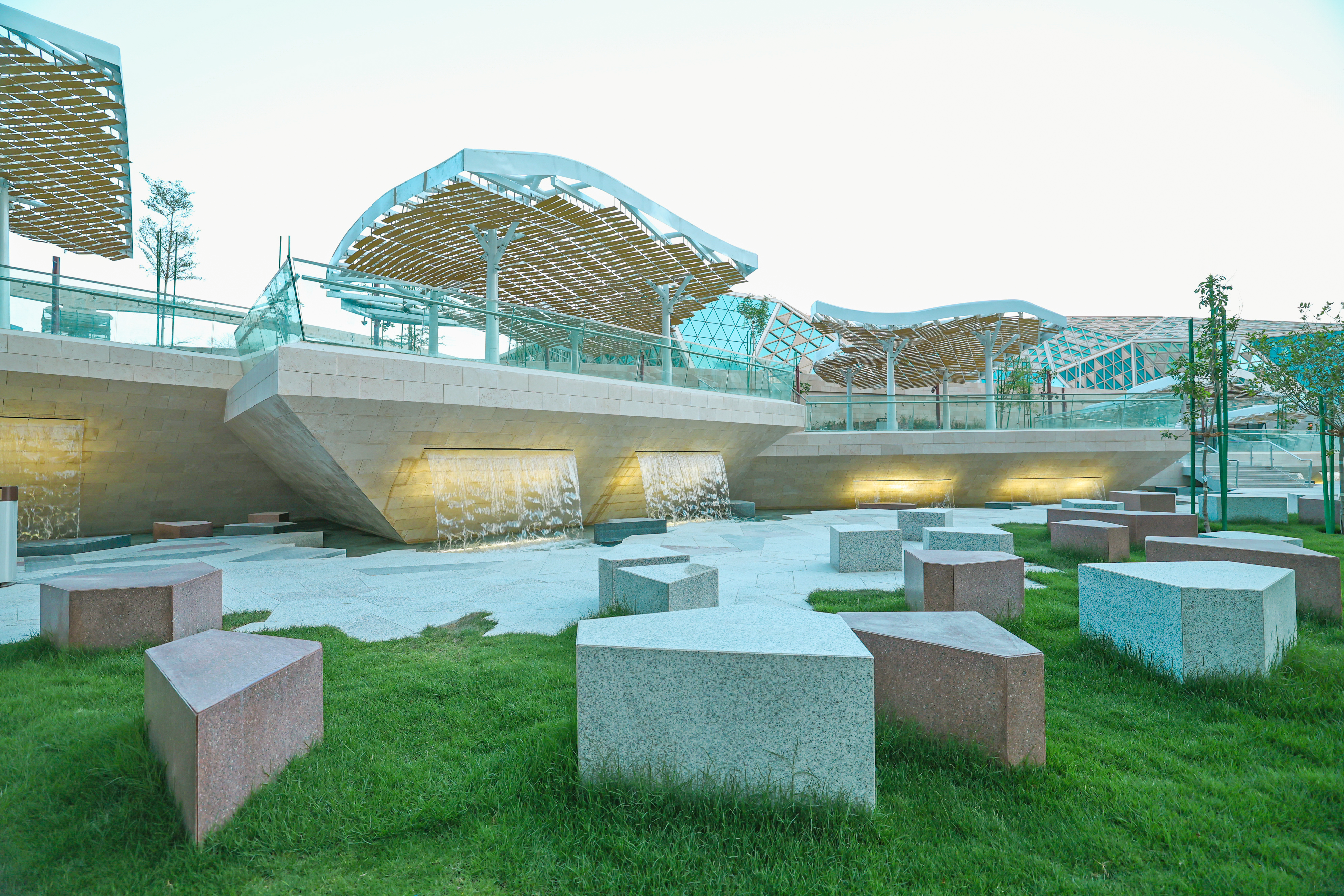
 Cover image – KAFD Park / image: Landworks Studio
Saudi Arabia is experiencing an unprecedented wave of rapid urbanization and modernization. At the center of this transformation is a concerted effort to redefine the nation’s global image through a commitment to sustainability. Amid the country’s growing adoption of green building frameworks, the King Abdullah Financial District (KAFD) Park achieved a milestone as the first project in Saudi Arabia to earn SITES certification, a challenging endeavor given the region’s desert climate.
Consider a climate where summer temperatures routinely exceed 45°C (113°F) and the region receives less than 100 mm (> 4 inches) of rainfall annually. Hot, dry conditions shape everyday life, making shade, misting systems, and nighttime activities essential for outdoor comfort.
This is the daily reality for the residents of Riyadh. Yet local communities have lived with these extremes for centuries, developing their own forms of resilience to thrive. Long before modern infrastructure, they constructed irrigation channels that stretched for kilometers through mountain valleys, supplying palm groves and the shaded crops beneath their canopies.
Today, the city uses complex, centralized water infrastructure to harvest and recycle water multiple times before discharge. Sustainability, in many ways, has long been embedded in Saudi Arabia’s local practices.
SITES provided a landscape-focused framework that complemented the LEED strategy for the overall built environment, offering both third-party validation and international recognition. As the first SITES Gold-certified project in Saudi Arabia, KAFD Park tested how a global benchmark translates to a markedly different climate and ecological context. The standard’s adaptability has enabled its global expansion, but the project team’s experience suggests that greater recognition of regional priorities and innovative pathways could create additional incentives for broader adoption in the future while preserving a globally consistent core.
About the Park
The site of KAFD Park was previously compacted urban fill. The design team saw an opportunity to create a functioning ecosystem on this heavily degraded site by engineering new soil substrates and introducing climate-adapted species.
Solutions for a unique ecosystem
A similar adaptive approach shapes the project’s water management strategy. While flash floods do occur in Riyadh, rainfall is so infrequent that stormwater features relying solely on precipitation would remain underutilized for most of the year. The team designed a stormwater harvesting system and tapped into Riyadh’s municipal Treated Sewage Effluent (TSE) network as the primary irrigation supply.
These tailored solutions illustrate how hyper-arid urbanism expands the definition of ecological performance. As global rating systems continue to evolve, learning from successful local projects helps refine how to apply these standards to engineered microclimates in the world’s most extreme environments.
In a hyper-arid climate, creating environments where both people and ecology can thrive is essential to achieving sustainability goals. KAFD Park demonstrates how a human-centered vision for the public realm can naturally align with SITES principles.
Strategies for thermal resilience
Thermal resilience was a key driver of the project, demanding an integrated, systems-based approach. The process began with understanding the site’s microclimate, including direct solar exposure, reflected heat from surrounding towers, and prevailing wind corridors that channel hot air. These analyses informed the careful placement and coordination of landscape elements.
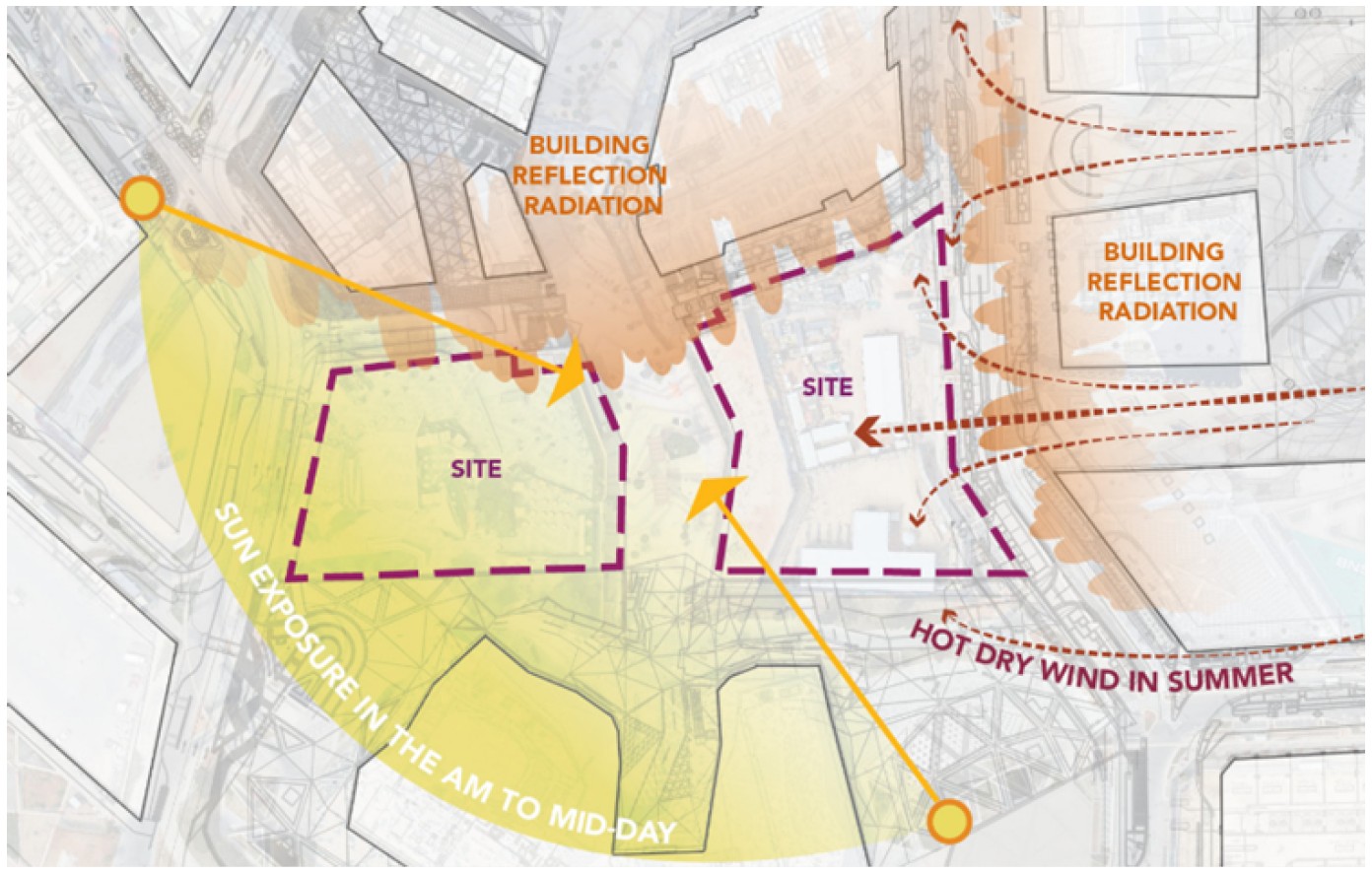 Climate Comfort Considerations Analysis / credit: Landworks Studio
Water features provide a good example. While widely recognized as a passive cooling strategy, water left isolated in a hyper-arid climate can quickly become a sun-scorched heat trap. At KAFD, water features were strategically located in shaded areas, surrounded by dense planting to enhance cooling, and paired with light-colored, high-solar-reflectance paving materials. Together, these elements create refreshing nodes while ensuring safe interactions.
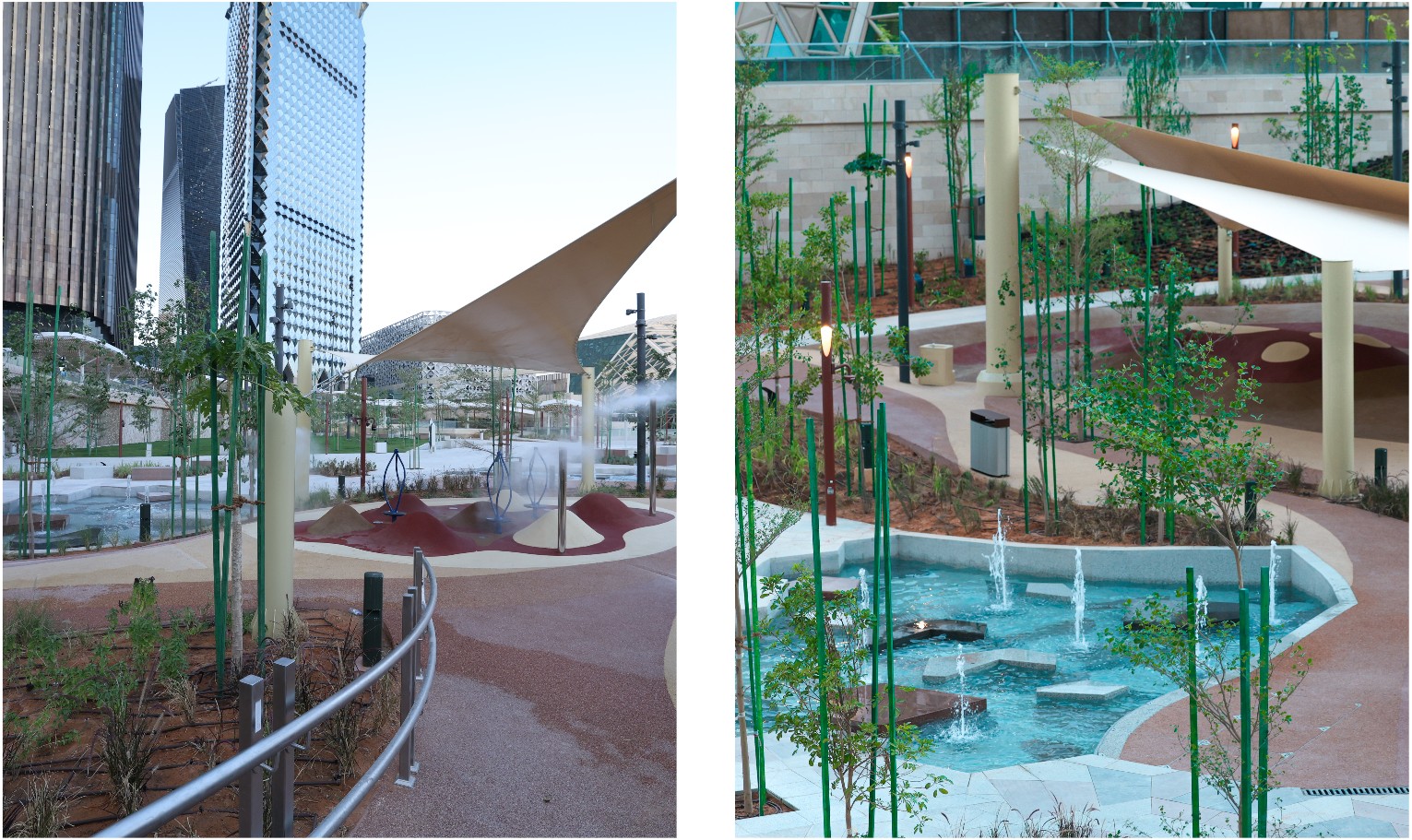 KAFD Park incorporated multiple features to create an integrated cooling microclimate. / credit: Landworks Studio
Trees are another essential component of thermal resilience. Beyond providing shade, they foster microclimates and enhance biodiversity in ways that artificial shade structures alone cannot.
KAFD Park incorporates more than 300 trees alongside nine shade structures. Notably, the design team specified a number of “hero trees”— large, mature specimens that establish a dense canopy from day one. These trees required rigorous procurement and acclimation, spending time in nurseries until they were adapted to thrive under local site conditions.
While native plants are important, the design reflects a pragmatic reality: in a context where indigenous desert flora is often sparse and low-lying, the use of adaptive species is a necessary strategy and encouraged by the SITES v2 Rating System to optimize biomass and effectively mitigate the urban heat island effect.
Investments in social infrastructure
Since opening in early 2026, KAFD Park has quickly become a popular destination, with families frequently highlighting it on social media as a new space for children. SITES has played an important role in encouraging the client to invest in social infrastructure that supports healthy, accessible, and inclusive public spaces. At KAFD, this translates into educational signage, public fitness amenities, inclusive children’s play areas, and vibrant food-and-beverage programming. These human-centered features are not only helping the project achieve SITES credits but also driving its success and setting a new regional benchmark.
Summary
Translating international sustainability metrics to hyper-arid urbanism offers a profound lesson for global practice. It forces a critical push-and-pull within the local industry, requiring design teams to act as advocates who must patiently cultivate local supply chains and test new construction workflows where none existed before.
By moving beyond quantitative metrics and prioritizing the physical engineering of thermal comfort, pioneering projects like KAFD are building a localized playbook. Ultimately, they prove that even in environments experiencing extreme climate conditions, thoughtful design can conjure a joyful, high-performing public realm where urban civilization thrives.
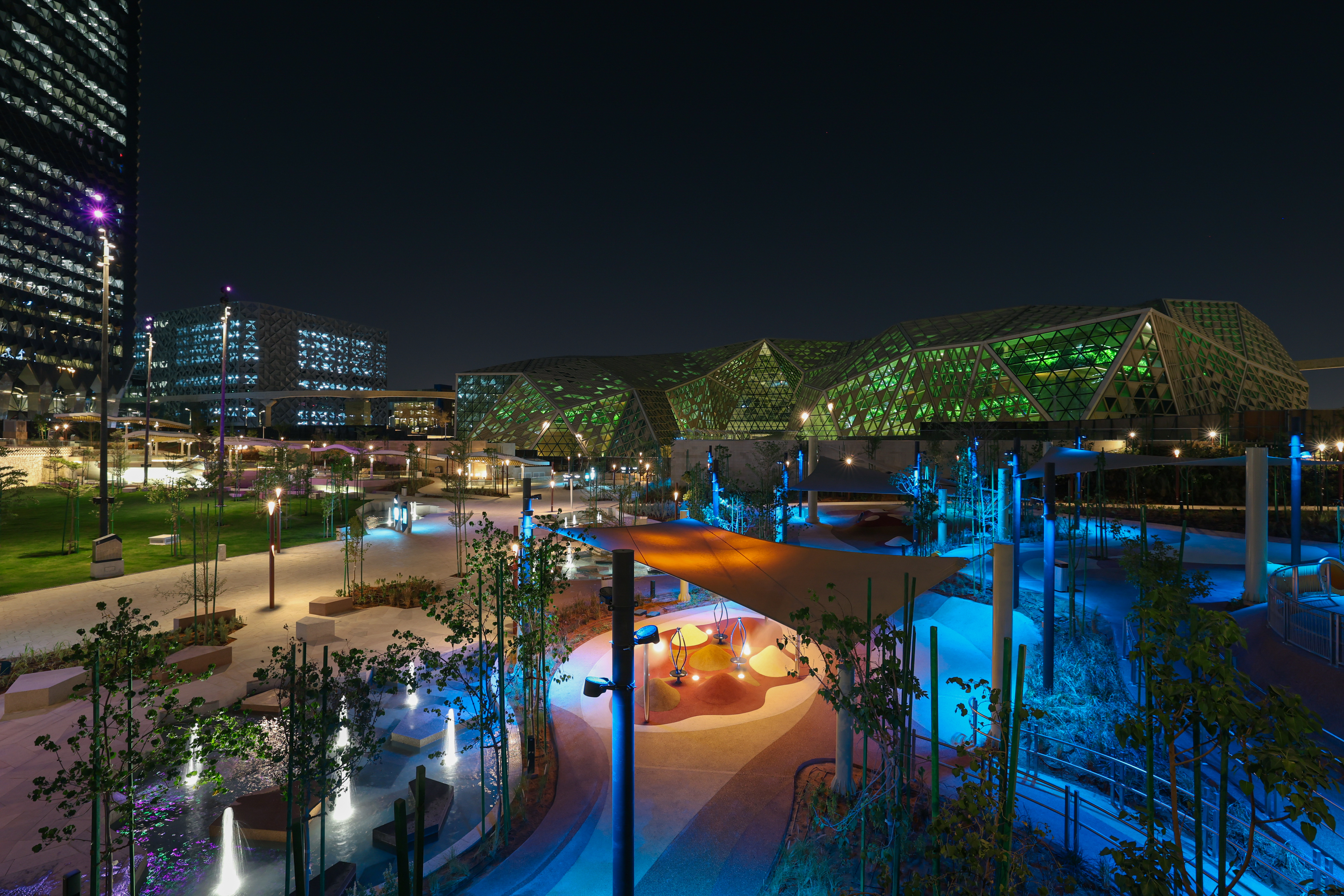 Designed to reflect local outdoor nightlife habits, the park provides well-lit spaces that support nighttime activities. / credit: Landworks Studio
Originally published on USGBC website. Special thanks to the Landworks Studio KAFD project team for sharing project information.
